



Peer Recognition's Compounding Effect
Posted by ASAP Awards on 10th Aug 2026
Peer Recognition's Compounding Effect
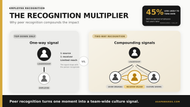
Most recognition programs are designed as one-way streets. Leadership recognizes employees. The flow is top-down, the decisions are managerial, the visibility is selective. The program works in a limited way, but it leaves a multiplier on the table.
The multiplier is peer recognition. When colleagues recognize each other, the signal is different from when leadership recognizes them. The research is consistent: peer recognition is among the most under-leveraged retention mechanisms in modern HR, and the reason is structural rather than strategic.
Why Peer Recognition Hits Different
Three things make peer recognition mechanically different from top-down recognition.
First, peer recognition signals what colleagues actually value, not what management says they should value. When a leader presents an award, the message is “the company recognizes this.” When a peer presents an award, the message is “we recognize this.” The we is the culture. The company is the policy. Employees trust their peers' judgment about behavior more than they trust their VP's, because their peers see the behavior daily and the VP usually doesn't.
Second, peer recognition compounds in a way leadership recognition doesn't. When leadership recognizes one employee, that's one motivational signal delivered. When peers recognize an employee, every peer participating in the recognition is also strengthening their own commitment to the behavior being celebrated. The recognizing peer leaves the moment more engaged, not just the recognized employee. The program produces multiple motivational signals per recognition event.
Third, peer recognition is harder to fake. A leader handing out awards can be performing recognition without believing in it. Peers can do this too, but it's harder to sustain because peers have to interact with each other constantly. Peer recognition that doesn't feel earned generates real social cost for the one who gave it. The system has internal accountability that top-down recognition lacks.
The Compounding Effect in the Research
The research on peer recognition specifically is less voluminous than research on recognition generally, but the patterns are consistent. Catalyst's research on frontline team dynamics found that peer interactions and team-level treatment drive frontline retention more strongly than direct management interactions in some industries. The team is the unit of belonging. The peer is the unit of recognition.
Achievers research found that 83 percent of HR leaders say recognition programs have a positive impact on engagement. The strongest programs almost always include peer-to-peer components, not just top-down. McKinsey's broader work on non-financial motivators showed peer praise and acknowledgment among the strongest contributors to sustained engagement.
The Workhuman and Gallup joint research that's been cited throughout this series found well-recognized employees were 45 percent less likely to have turned over two years later. “Well-recognized” in their definition includes peer-to-peer acknowledgment, not just manager or executive recognition.
Why It Doesn't Happen Naturally
If peer recognition is this effective, why isn't it the default? Three structural reasons.
First, peer recognition is harder to budget than top-down recognition. With manager-driven programs, you have a clear decision chain: manager decides who gets recognized, budget gets allocated against that decision, recognition gets delivered. With peer recognition, the decision is distributed. Who decides? How much can be spent? What happens if everyone nominates everyone? Budget defensibility is harder.
Second, peer recognition can devolve into a popularity contest if it isn't designed well. The most-liked person on the team gets recognized regularly. The quiet high performer who doesn't seek attention gets overlooked. This is a real risk and it kills peer programs that aren't designed with structural guardrails.
Third, peer recognition requires cultural permission that many workplaces don't actively grant. Employees in command-and-control cultures hesitate to recognize peers because it can feel like overstepping. The behavior that the peer recognition program needs to produce is the behavior that the existing culture often discourages. So the program launches, fails to gain adoption, gets quietly retired, and leadership concludes that peer recognition “doesn't work here.”
How to Structure a Peer Recognition Program That Doesn't Devolve
The structural design choices matter more than the program enthusiasm. Six rules that the most durable peer programs share.
- Tie peer recognition to specific company values, not generic behavior. “Recognize a colleague who exemplified safety this week” is specific and defensible. “Recognize someone awesome” is vague and devolves into popularity. The values list provides the guardrails.
- Require a written justification, not just a nomination. The peer making the recognition has to write 1-2 sentences about the specific behavior they're recognizing. This filters out reflexive nominations and produces documentation of the recognized behavior, which becomes useful in performance reviews and culture audits.
- Cap nominations per peer per period. If everyone can nominate unlimited coworkers, the program loses meaning. Three nominations per quarter per employee is a reasonable cap. Forces everyone to think carefully about who and why.
- Make the awards tangible, not virtual. A digital badge in an HR platform produces a fraction of the retention effect that a tangible award produces. Even modest peer-recognition tokens (small custom plaques, named pins, certificates with a meaningful design) outperform virtual recognition. The status-currency argument from earlier in this series applies fully to peer recognition.
- Quarterly peer recognition awards, in addition to the running monthly recognition. Roll up the peer nominations into a quarterly peer-recognition presentation, alongside the manager-driven and leadership-driven recognition. The peer-nominated awards get presented at the same event as the leadership-nominated awards. Equal visibility signals that the company genuinely values both.
- Track who gives recognition, not just who receives it. The peers who consistently recognize others are usually your culture carriers. Identifying them is a retention strategy in itself. They're the people who keep the recognition culture alive when the formal program goes quiet.
The Product Side
Peer recognition programs work best when the tangible awards match the moment. Custom plaques for peer-nominated quarterly awards. Crystal recognition pieces for the annual peer-recognition award (the one chosen by employee vote, usually with the highest cultural credibility). Perpetual monthly displays can dedicate sections to peer-nominated recognition, sitting alongside leadership-nominated monthly awards.
The point isn't that peer recognition requires our product line specifically. It's that any peer recognition program needs tangible awards to work. The virtual-badge approach almost always fails to sustain. Whether the pieces come from our St. Louis factory or somewhere else, they need to be physical, durable, and presentable. That's the operating requirement.
Closing
Your leadership says you value teamwork. Then you hand out individual awards selected by managers. Your employees notice the gap, and the gap is the credibility cost of saying one thing and structuring another.
A two-way recognition program (leadership-driven AND peer-driven) outperforms a top-down-only program on every measurable retention dimension. The structural design matters more than the program enthusiasm. Get the design right and peer recognition becomes a compounding multiplier. Get the design wrong and it becomes a popularity contest you'll quietly retire in eighteen months.
Build it right the first time.
ABOUT ASAP AWARDS
Since 1981, ASAP Awards has hand-built custom recognition awards for trucking fleets, 3PLs, manufacturing operations, and corporate teams, from our women-owned, family-run factory in St. Louis, Missouri. Three generations. Factory-direct. No imported glass, no resold catalogs. Truck driver awards, forklift driver awards, years-of-service plaques, crystal recognition pieces, and perpetual monthly displays, built so the people who receive them don't put them in a drawer.
Explore our corporate recognition programs or call us at (636) 537-1517.